

Description
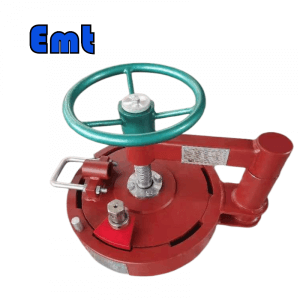
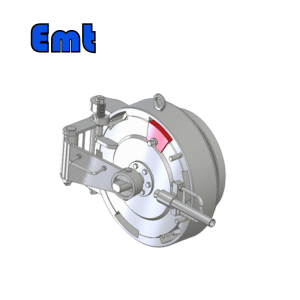
The Bandlock Quick Opening Closure is a device on the round port of the pressure pipe or pressure vessel. And it is a mechanical device that can be opened or closed quickly. It generally includes cylinder flange, head cover, hook ring or clamp, and sealing ring. There are also components such as safety interlock mechanism, opening and closing mechanism, rotating arm and short joint (when necessary).
Bandlock Quick Opening Closure | ||||
Design Pressure | 1.6MPa-30MPa | |||
Corrosion Allowance | 2mm | |||
Seismic Fortification Intensity | 7 Degrees | |||
Work Medium | Oil, natural gas, Water and ore pulp, etc. | |||
Opening Time | Within 60s less than 200N | |||
Opening Type | Vertical or Horizontal | |||
Bandlock Quick Opening Closure
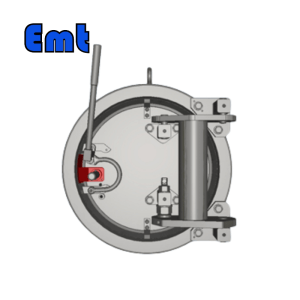
To operate this procedure, it needs professionals with professional training
(1) Firstly, all employees need to read the signs on the Bandlock Quick Opening Closure very attentively.
(2) If the operator makes use of the wrong instruments, The safety chain system will sustain irreversible harm as a result. Consequently, the operator is never permitted to open the blind using a hammer.
(3) Afterward, they must manually loosen the upper vent bolt. If there’s a sound at this point, or if oil starts to spill. This indicates that the cylinder is under pressure. In this situation, the cylinder’s pressure needs to be released. Note: An internal pressure relief port cannot be used with the vent screw.
(4) Upon the full release of pressure within the cylinder. The hollow screw is then manually unscrewed by the operator.
(5) A little chain connects the hinge with the safety plug.
(6) The operator keeps the screw unscrewed. So, the bolt ends progressively get longer. until the tail bolt and the nut bracket come into contact.
(7) Grab the handle of the slider.
(8) Spread open the closure’s flange.

Close the Bandlock Quick Opening Closure.
(1) Correct and cautious blind closure increases the likelihood of successful subsequent procedures.
(2) The safety chain system will sustain irreversible harm if the wrong tools are used.
(3) The closure should never be opened with a hammer.
(4) The operator needs to take great care when cleaning the sealing ring. Additionally, they are lubricated with a little engine oil. because applying grease that is too thick will result in leaks when the pressure is low.
(5) Scrub and oil the gasket’s surface.
(6) Apply grease to the bolts.
(7) Keep the closure flange closed.
(8) Tighten the stud bolts gradually.
(9) Upon touching the two nut brackets. Stop tightening the bolt right away.
(10) Avoid using a wrench to tighten the bolts.
(11) Apply oil to the bolt holes and vent bolts.
(12) Putting the security barrier back.
(13) Handle for recovery.
Lubrication and upkeep of Quick Actuating Closures

(1) Whenever the blind plate is in use. The blind plate needs to be lubricated by the operator.
(2) Second, oil the hinge shaft.
(3) Apply lubricant to sliding rails, bolts, and nuts.
(4) Grease the O-ring and threads of the vent bolt.
Put the seal back.
(1) Before operating the blind plate each time, the operator ought to inspect the seal. Considering that the seal needs to be replaced if it is damaged or not tight.
(2) When using motor oil for lubrication. When handling the seal, including the blind plate’s groove, operators should exercise caution.
(3) The sealing ring’s position needs to be precise. The seal groove needs to be facing outside. Set up the washer’s anti-blowout spring behind it.
Pigging indicators are used
The operator should confirm that the sign plate has been reset before beginning any pigging operations. as well as the state of the remote transmission device.
The trigger plate is touched by the pigging ball as it passes. The sign board will flip from horizontal to vertical downward as a result of this. The remote transmission device simultaneously transmits a pass-through signal.
The operator must manually reset the sign board after the pigging process is finished.
Steps for sending and operating pigs
Getting ready to ship pigs
(1) First, drain the used oil tank. Verify the condition of every valve. Open the safety valve’s lower bottom valve.
(2) Lift the blind plate with rapid opening. After cleaning, lubricate the sealing ring.
(3) Insert the pig inside the apparatus. To the size head, push the pig. Shut the blind plate and make sure the closing signal is working.
(4) The operator opens the barrel’s front end’s ball valve on the balancing pipe. Next, allow the oil to enter by opening the bypass valve on the ball barrel’s input ball valve. The little ball valves at the low pressure and high-pressure ends should be opened in that order. To release the gas, open the serving cylinder’s exhaust valve. Next, take note of the waste oil tank’s liquid level. Once the rise is clearly visible, close the exhaust valve. After a minute or two, wait to vent once more and shut off the exhaust valve. Shut off the serving cylinder intake ball valve’s bypass valve.
(5) Choose to carry out the process of sending pigs.
The delivery process for pigs
(1) First, the barrel inlet ball valve is opened by the operator. Open the barrel’s outflow ball valve once it has reached its full opening.
(2) Close the outgoing ball valve after the outlet ball valve has fully opened. (The serving cylinder’s inlet, outlet, and outgoing ball valves are linked with one another). Change the process to the pig transmit process. Alarm for the pass ball indicator signal. Go crazy.
(3) Once the pig has left the station, verify a few minutes later and open the outflow ball valve. Close the inlet and outlet ball valves of the serving cylinder once the outlet ball valve has fully opened (the serving cylinder’s inlet, outlet, and outbound ball valves are linked with one another). Go back to the standard entry procedure. Complete the pig work dispatch.
(4) Perform a nitrogen purge and empty the oil from the ball barrel. Run the sump tank dry.
Operational safeguards
(1) Every necessary employee needs to be present. They must maintain contact with the station control room and cling onto the walkie-talkie. As you do this, get the tools you’ll need ready, including adjustable wrenches.
(2) The operator needs to be aware of the switching sequence and the condition of every valve during the serving operation. To avoid circumstances such as lame pressure, they must adhere rigorously to the protocols.
(3) Be mindful of your own security. Avoid positioning yourself immediately in front of the serving cylinder’s Quick Actuating Closures.
(4) If it is discovered that the pig has not been dispatched or that the outgoing pressure has considerably increased. The pig might then get caught in the line. The operator needs to arrive on time at the dispatching room at this point. and determine whether to give up losing based on the circumstances.
Operations for accepting pigs
Getting Ready to Accept Pigs
(1) First, drain the used oil tank. Verify the condition of every valve. It is necessary to open the safety valve’s lower bottom valve.
(2) Verify the tight seal of the Quick Actuating Closures.
(3) Get the filthy oil cylinders and rags ready. Place a piece of plastic wrap underneath the receiving tube’s blind plate. This is where contaminants, etc., are cleansed out.
(4) To feed oil, open the ball valve’s bypass valve at the ball receiving cylinder’s outlet. (First, open the low-pressure end’s little ball valve. Next, open the high-pressure end’s little ball valve. To release the gas, open the ball receiving cylinder’s exhaust valve. At this point, the operator monitors the filthy oil tank’s liquid level and closes the exhaust valve when it increases noticeably. After a minute or two, wait to vent once more and shut off the exhaust valve. Close the ball valve’s bypass valve at the receiving cylinder’s outlet.
(5) Choose to put the pig receiving protocol into action.
The following is how the pig-receiving process is managed:
(1) First, open the ball valve located at the ball collection tube’s output. Open the ball receiving tube’s inlet ball valve once the outflow ball valve has been fully opened.
(2) After the ball valve at the ball collection cylinder’s entrance is fully expanded, close the entry ball valve. The ball receiving cylinder’s inlet, outlet, and inbound ball valves are all linked with one another. After that, a pig-receiving process takes over. Await the pig’s arrival.
(3) The pig enters the station when the pigging indicator signal sounds an alarm. Once the pig’s entry into the station has been verified, open the output ball valve. Close the serving cylinder’s inlet and outlet ball valves once the outlet ball valve has been fully opened. (The serving cylinder’s inlet, outlet, and outgoing ball valves are linked with one another). Go back to the standard entry procedure.
(4) Perform a nitrogen purge after emptying the oil in the ball collecting cylinder. Run the sump tank dry.
(5) As soon as possible, open the blind plate and the receiving tube. Take the pipe cleaner out. Clear the contaminants.
(6) As needed, shut the receiving tube’s quick-opening blind plate. Finish the pig work.
Verification of the shipment and receipt of the pig
(1) Pigs travel via a pipeline equipped with a ball indication when they are sent or received. It makes contact with the trigger plate, and the ball indicator simultaneously sounds an alarm. Turning the on-site sign board horizontally flips it upside down. The remote transmission device simultaneously transmits a pass-through signal. The Chengdu control center and the station control room may both see it on display. It is able to determine if the pig has arrived at the station or been despatched.
(2) Fit the pig with an electronic location transmitter. The receiver is positioned close to the pipelines that enter and exit. As a result, the receiver sounds an alarm whenever the pig enters or quits the station and travels through the pipeline. This can tell you if a pig has arrived at the station or been dispatched.
(3) Because of a certain interference that exists between the pipe diameter ratio and the pipe pig. As a result, the pig will rub against the pipe wall and create a loud noise when it runs with the oil flow in the pipeline. Additionally, the pipeline will vibrate at this point. Based on the sound and vibration of the pipeline, it can determine if the pig has been sent outside or has arrived at the station.



Reviews
There are no reviews yet.