

Description
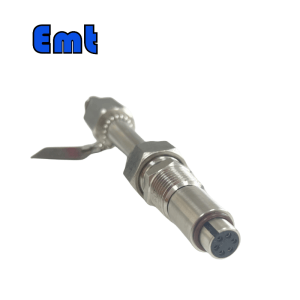
Facing the growing issue of corrosion in refinery equipment, the need for effective monitoring is more pressing than ever. Enter EMT Electrical Resistance Probes: a top-tier solution that offers a seamless and non-disruptive way to keep tabs on corrosion rates. With these ingenious devices, it’s possible to watch over the health of your equipment in real time, ensuring production keeps humming along without a hitch.

Model Selection Table
| Model | |||||||||||||||
| ECP | Electrical Resistance Probes | ||||||||||||||
| -Code | Plug | ||||||||||||||
|
Pxxx | Type | Material | Sealing material | ||||||||||||
| 0 | Not Required | 0 | Carbon steel | 0 | Not Required | ||||||||||
| 1 | Hollow plug | 1 | 316 stainless steel | 1 | Fluorine rubber sealing ring/PTFE main seal | ||||||||||
| 2 | 316L stainless steel | 2 | HNBR | ||||||||||||
| 3 | F51 duplex stainless steel | ||||||||||||||
| 4 | INCONEL nickel based alloy | ||||||||||||||
| -Code | Temperature and pressure gauge assembly | ||||||||||||||
| Txxx | Connection size | Body material | Temperature and pressure gauge material | ||||||||||||
| 0 | Not Required | 0 | 304 stainless steel | 0 | Not Required | ||||||||||
| 1 | 1/2″ | 1 | 316 stainless steel | 1 | 304 stainless steel | ||||||||||
| 2 | 3/4″ | 2 | 316L stainless steel | 2 | 316 stainless steel | ||||||||||
| 3 | F51 duplex stainless steel | ||||||||||||||
| -Code | Probe assembly | ||||||||||||||
| Dxx ‐Lx″ | Connection size | Body material | Pipeline specification (x ″) | ||||||||||||
| 0 | Not Required | 0 | Carbon steel | Probe length varies with pipeline specifications | |||||||||||
| 1 | 1/4″ | 1 | 304 stainless steel | ||||||||||||
| 2 | 1/2″ | 2 | 304L stainless steel | ||||||||||||
| 3 | 316 stainless steel | ||||||||||||||
| 4 | 316L stainless steel | ||||||||||||||
| 5 | F51 duplex stainless steel | ||||||||||||||
| Example: ECP-P121-T021-D02-L6 ” ECP: resistance probe assembly; P121: The hollow plug is made of 316L, with fluoro rubber ring and PTFE main seal; T201: The size of the temperature and pressure gauge assembly connector is 3/4″, and is made of 304 stainless steel. The temperature and pressure gauge is made of 304 stainless steel; D02: The probe connection size is not required, and the probe body is made of 316L stainless steel; L6″: The probe length is suitable for a 6″ pipeline. | |||||||||||||||
Technical Evolution
Historically, since their introduction in the 1960s, resistance probe technology has solidified its role in China’s refining sector for corrosion assessment. Progressively, EMT has transformed the technology from its manual, portable beginnings to an advanced automatic recording system capable of online monitoring. This evolution has cemented resistance probe monitoring as a standard practice post-2000, renowned for its exceptional sensitivity, rapid response, and robust anti-interference capabilities, alongside its wide-ranging applicability.
Operational Principle
At the heart of EMT’s Electrical Resistance Probes lies a straightforward yet effective principle. These devices monitor corrosion indirectly by measuring the changes in AC signals that occur as a result of metal loss from corrosion. As depicted in Figure 1, corrosion leads to a reduction in the cross-sectional area of the probe’s measuring element, and this, in turn, induces changes in the AC signal. By applying an AC signal to the test piece, we can deduce both the degree of thinning and the corresponding corrosion rate. Under conditions where the measuring element’s material and the erosion state of the medium closely match those of the equipment under scrutiny, the probe’s readings can accurately represent the equipment’s corrosion rate.

Distinct Advantages
Standing out from other methods, EMT’s Electrical Resistance Probes boast an impressive measurement resolution of up to 30nm. This precision enables the detection of minute corrosion thinning, corresponding to an annual corrosion rate of 0.254mm/a, within a mere hour. Their lifespan extends to a maximum loss of 0.25mm, assuring durability for long-term monitoring.
Comparative Excellence
When juxtaposed with traditional corrosion measurement methods like corrosion coupons and linear polarization, EMT resistance probes shine with distinctive advantages. Universally applicable to all corrosive media, these probes provide rapid response times and measure average corrosion rates with exceptional sensitivity, all while being minimally affected by external factors. This confluence of features makes them a versatile and cost-effective solution, adaptable to the multiphase media encountered in oil, gas, water, and soil environments.
Strategic Significance
Monitoring corrosion with EMT Electrical Resistance Probes transcends mere measurement; it serves a broader strategic purpose:
- It yields real-time corrosion rates for pipelines and equipment, facilitating informed assessments of system operation times.
- It serves as an early warning system against environmental conditions prone to causing corrosion failure.
- It informs the scheduling of maintenance cycles based on the monitored corrosion rates.
- It averts potential accidents like leaks due to corrosion, thereby mitigating environmental hazards.
- It assesses the efficacy of corrosion control measures and optimizes the application of chemical inhibitors.
- It elucidates the impact of environmental factors on system corrosion, providing a comprehensive understanding of the facilities’ actual corrosion status.
Comprehensive System Composition
EMT’s corrosion monitoring system is designed to accommodate various operational requirements, with configurations including wired, wireless LAN, wireless IoT, and offline data download options. Each system component, from the probes to the data servers, is meticulously designed for integration and user-friendliness.
Advanced Probes and Analyzers
The high-precision resistance probe stands as a cornerstone of the EMT monitoring system, adeptly suited for harsh environments. The probe assembly, customizable for different pressures, includes a body with sensitive monitoring elements. The accompanying collection analyzer, housed in an explosion-proof chamber, works seamlessly with the software to provide real-time monitoring and data analysis.
Ease of Installation and Operation
EMT Electrical Resistance Probes are engineered for straightforward installation and user-friendly operation. The system facilitates effortless data collection and analysis, providing comprehensive insights into the health of your refinery’s infrastructure.
In summary, EMT Electrical Resistance Probes deliver a sophisticated, reliable, and accessible solution for corrosion monitoring within the refining industry. Their advanced technology, coupled with a complete system of components, renders them an invaluable asset for preserving the integrity of vital infrastructure.


Reviews
There are no reviews yet.