

Description
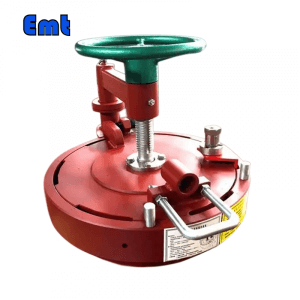
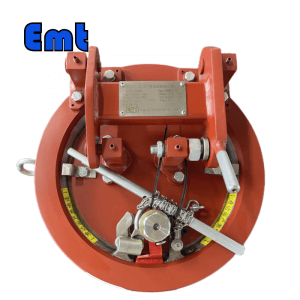
The QOC (Quick Opening Closure) is generally on the circular opening of the pressure pipe or pressure vessel. It is a mechanical device that can realize quick opening or closing. The QOC (Quick Opening Closure) is composed of a long neck section, a blind plate cover, two valve clamps and accessories. Both vertical and horizontal quick-opening blind plates. Operators can be opened and closed quickly and conveniently. The safety interlock device ensures that the QOC can be opened without pressure. And the pressure can also be increased only after the interlocking device is closed. An operator can open and QOC of various sizes with ordinary tools. After opening the safety interlock device. And then rotate the opening bolt. Then loosen the clamp and tighten the opening bolt. Finally, close the safety interlock device.
This device is part of the pipeline cleaning equipment. The industrial pipeline needs to be cleaned before production and during use. Therefore, it is very necessary for the pipeline to be equipped with a set of such equipment. So if you have any other questions, please contact our professionals to answer them for you.

QOC (Quick Opening Closure) Characteristics | ||||
Design Pressure | 1.6MPa-30MPa | |||
Corrsoion Allowance | 2mm | |||
Seismic Fortification Intensity | 7 Degrees | |||
Work Medium | Oil,Nature gas,Water and ore pulp etc. | |||
Opening Time | Within 60s less than 200N | |||
Opening Type | Vertical or Horizontal | |||
Disposal of abnormal pigging events in oil and gas pipeline
Pigging is generally divided into two types. One is pigging to maintain a normal production cycle. Mainly to maintain the set production function, we call it production pigging; The other is to enable internal inspection of the pipeline. Pigging is carried out to ensure that high-quality data are obtained through internal inspection. We also call it special pigging or internal detection pigging. In terms of technical complexity, pigging times and cleaning degree are to be achieved by pigging. The latter is more severe than the former. Generally speaking, production pigging is periodic. So this is part of the routine maintenance of the pipeline. The main purpose of internal inspection pigging is to create good conditions for the internal inspection of pipelines. In the process of internal inspection and pigging. The frequency of abnormal pigging events is also much higher than that of production pigging.
Internal detection and pigging abnormal events are handled. Generally, the methods of pressure holding, reverse transportation, rescue pig pushing, pipe breaking, and ball taking are adopted. At the same time, the pigging process also contains a lot of valuable information for production status analysis. For example, the crude oil pipeline depends on the pushed hard wax or condensate. In this way, the wax precipitation point of the transport medium can be estimated and the effect of the historical heat transport process can be evaluated.
Because the gas pipeline can predict the quality of the transmission medium according to the introduced impurities. Therefore, it is necessary to manage the pigging detection information in the pipeline. Thus forming big data of pigging information. This is used to simulate the possible risk state of pigging in the same type of pipeline. This is also the inevitable trend of the development of big data in pipeline pigging in the future.

Cause analysis of stagnation
There are two main reasons for pig stagnation. Firstly, there are too many oil sands deposited in the pipeline and the station spacing is too long (308 km). Resulting in excessive impurities accumulated at the front end of the pig during operation. Which increases the wear of the pig. Its sealing performance is degraded. The pig loses enough driving force after discharge. In addition, the common effect of factors such as frequent changes in transportation volume. This causes the pig to stop intermittently.
Secondly, the terrain of the area where the pipeline passes from station C to station D fluctuates greatly. And it has numerous inclined wells. The pig needs a large driving force when passing through the inclined well. In addition, inclined wells may become the main area for depositing oil sands. This makes it easy for the pig to stagnate at the position of the inclined shaft or climb.

Recommended measures
In order to optimize the pigging and internal inspection before internal inspection in the future. This reduces the operational risk of pigging and testing. We propose the following suggestions to all parties involved in the pigging process:
Suggestions for pigging contractor:
① Increase the wear resistance of the cup and the straight plate;
② An improved double section pig is used.
Suggestions for pigging contractor and operating company:
③ Strengthen two-way communication during pig operation.
Suggestions for oil and gas control center and operating company:
④ Avoid shutdown during pigging;
⑤ The oil will also be transported from the pipeline after entering the storage tank for sedimentation.
Suggestions for operating companies:
⑥ Shorten the distance between receiving and launching stations.

At the same time, none of the above abnormal events that occurred during the internal detection pigging process has affected the normal oil and gas production. There is a common reason. That is to say, all pigging devices are provided with discharge holes with different numbers and sizes based on the evaluation of the basic information of the pipeline. The design of the pig was improved later. According to the pipe diameter, transmission medium, pipeline direction, and other factors, different sizes of drain holes are set in the pig. Thus, greatly reducing the occurrence of similar wax plugging accidents. Therefore, every abnormal pigging event contains a lot of information. This includes promoting technological development and management reform. At the same time, it has accumulated experience in avoiding many similar near misses or eliminating accidents completely in the bud.



Reviews
There are no reviews yet.